About Me & Book Choice
Hi! I’m taking this class because I’ve always been curious about how our brains work, especially when it comes to how we think and make decisions. I feel like I sometimes make choices without really thinking them through, and I wanted to understand why that happens. I chose to read Thinking, Fast and Slow by Daniel Kahneman because I heard it talks a lot about how people think and the mistakes we make without realizing it. I thought it would help me understand myself and others better. It’s also cool that it connects psychology with real life.
About the Author
Daniel Kahneman is a really well known psychologist. He actually won the Nobel Prize in Economics, even though he’s not an economist. He got his PhD in psychology and spent most of his career studying how people make decisions and how our thinking can be biased. He worked closely with another psychologist named Amos Tversky, and together they did a lot of research that changed how we understand decision making and behavior. Kahneman is definitely an expert in this area, he’s published tons of studies and his work is used in psychology, economics, and even politics and business.
Summary of the Book
Thinking, Fast and Slow is all about the two ways our brain thinks. Kahneman calls them System 1 and System 2.
- System 1 is fast, automatic, and emotional.
- System 2 is slow, logical, and takes more effort.
Most of the time, we use System 1 because it’s quick and easy, but that’s where we make a lot of mistakes. Kahneman gives examples of how people jump to conclusions, rely too much on gut feelings, and fall into mental traps like overconfidence or thinking something is true just because it’s familiar. He uses real studies and stories to show how these two systems work in everyday life from money choices to relationships.
The main message is that we should try to be more aware of how we think, especially in situations that need careful judgment. The book shows how our brains aren’t as rational as we like to believe—and how understanding that can help us make better decisions.
Analysis of the Book
This book fits perfectly into what we’re learning in class. It talks about cognitive biases, heuristics, attention, and judgment, which are all key parts of cognitive psychology. But it goes even further by connecting those topics to real life situations, which I found really helpful.
Before Kahneman’s work, most economists and researchers thought people made logical decisions. But this book helped prove that our decisions are often influenced by emotion, shortcuts, and mental habits. It really changed how people study the brain and behavior.
Even though it’s based on research, the book is super easy to understand. Kahneman explains everything clearly, and the examples make it interesting. It’s not written like a textbook, it’s more like a deep conversation about how your mind works. The audience is pretty wide too, students, professionals, or really anyone interested in psychology or behavior could learn something from it.
My Reaction
This book honestly made me think a lot about how I make choices. I used to think I was being logical most of the time, but now I see how often I rely on quick thinking or gut reactions. It definitely made me want to slow down and think more carefully, especially with important decisions.
I would recommend this book to anyone, especially if you’re into psychology or just want to understand people better. It’s one of those books that actually makes you think differently after reading it. It helped me connect what we’re learning in class to real life, and it made me more aware of my own thinking habits.
Media Content
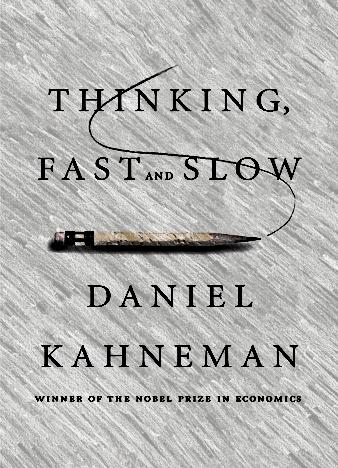
Book Cover:
Author:

Interview:
Apa Citation:
Kahneman, D. (2011). Thinking, fast and slow. Farrar, Straus and Giroux.
 Site Title